

Table of Contents
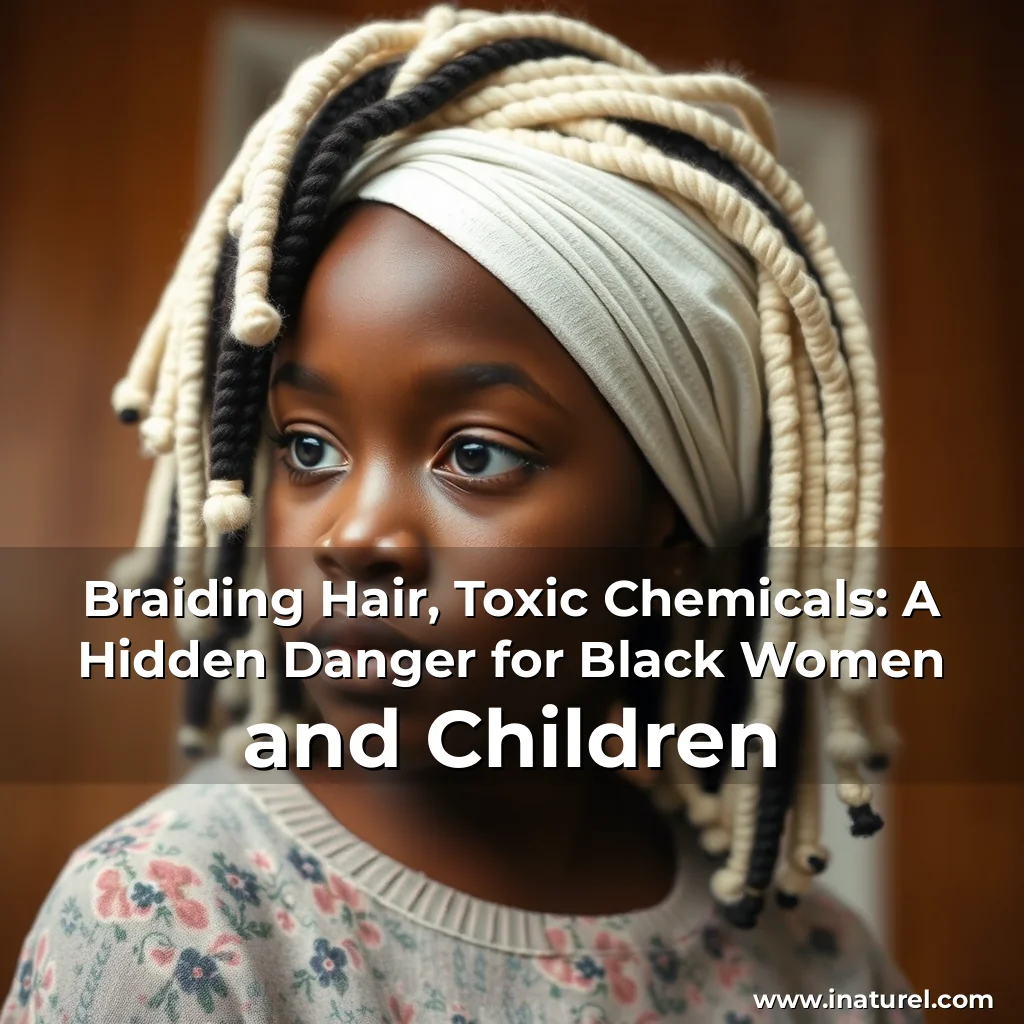
For Black women and children, synthetic braiding hair has been a staple in their hairstyles for decades. However, a recent study by Consumer Reports has revealed that many of these synthetic braiding hairs contain toxic materials, including carcinogens, volatile organic compounds (VOCs), and heavy metals.
What’s Behind the Study?
- Consumer Reports conducted a study on 10 different brands of synthetic braiding hair, testing for carcinogens, VOCs, and heavy metals.
- The study was sparked by a focus group of Black women who expressed concerns about the potential health risks of synthetic braiding hair.
- Consumer Reports’ director and head of product safety testing, James Roger, Ph.D., is a father of two Black girls who often wear synthetic braiding hair, motivating him to take action.
The study found that 100% of the samples tested positive for carcinogens, with only three tested positive for known carcinogens. Carcinogens are substances that have a proven link to cancer, while VOCs are man-made chemicals produced during the manufacturing process of synthetic braiding hair.
The Chemicals Behind Synthetic Braiding Hair
- Benzene, a known carcinogen, was detected in two products from the brand Sensationnel and one from Magic Fingers.
- Nine out of 10 braiding hair products tested positive for detectable levels of lead, which can cause substantial health issues with prolonged exposure.
- VOCs, such as those found in gasoline and cigarette smoke, were also detected in all 10 samples of the products.
James Roger, Ph.D., explains that the ingestion model provided quantitative data when measuring risk, highlighting the potential for women working in salons to experience lead exposure through ingestion, inhalation, or skin contact.
Alternatives and Regulation
Consumer Reports is calling for policy reform from the FDA under the Food and Drug Cosmetic Act, with a petition to join requesting regulation of artificial braiding hair.
- Some states are already putting through cosmetic safety acts, and Rogers suggests that they should add artificial braiding hair to their regulations.
- He recommends that consumers take precautions, such as removing braids or styles before the four-to-six-week average and extending the time between styles to reduce exposure.
- Rogers also suggests testing alternative products, such as plant-based braiding hair, which are becoming increasingly popular in the natural hair care movement.
Rebundle, a company founded by Ciara May, has seen an increase in sales and engagement since the study was released, with May stating that the company prides itself on being transparent with its customers, listing all ingredients on its website.
Why Transparency Matters
“People who are working in the industry should band together to make sure that we shape the industry in the way that we want to see it,” says May.
“We did that to set the standard of what we believe should be the level of transparency for this beauty product, because every other beauty product that you’ll buy that is likely FDA-regulated has to list all of its ingredients.”
May’s call to action encourages other industry workers to uphold their obligation to consumers by pushing non-toxic beauty products and being transparent with product ingredients.
The FDA and Regulation: A Path Forward?
The FDA has the authority to regulate artificial braiding hair under the Food and Drug Cosmetic Act, but it’s unclear what the future holds.
| Regulatory Action | Description |
| State Regulation | Some states are already putting through cosmetic safety acts, and Rogers suggests that they should add artificial braiding hair to their regulations. |
| FDA Regulation | Consumer Reports is calling for policy reform from the FDA under the Food and Drug Cosmetic Act, with a petition to join requesting regulation of artificial braiding hair. |
Ultimately, the decision to regulate artificial braiding hair lies with the FDA and lawmakers.

news is a contributor at inaturel. We are committed to providing well-researched, accurate, and valuable content to our readers.
You May Also Like



Share this article: